
A Typical Day
A Typical Day
Our Curriculum
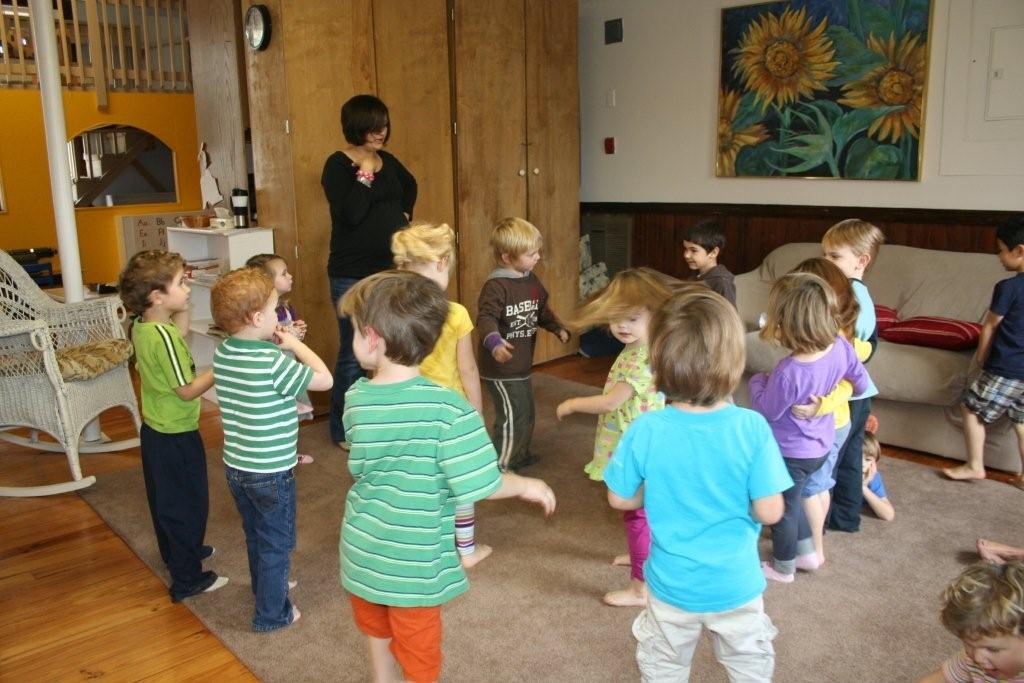
The Children’s Schoolhouse has developed a curriculum over the years that have become known in Early Childhood Education as Emergent Curriculum. This curriculum is built on a trust in the power of play and on the concept that children are active rather than passive learners and learn primarily by doing rather than listening. It espouses the need for curriculum to be responsive to a particular classroom and to draw on parent talents and skills; and therefore the curriculum will look different from year to year.
Teachers are responsible to observe and listen to children, and to manipulate the environment in such a way that children are exposed to all areas of preschool learning (cognitive, social, fine and gross motor, emotional, and creative) as they play. The Schoolhouse has adopted “Pathways to Learning” as a curriculum guide in order to maintain consistency. This is a curriculum guide developed and in use at “Open Door” school in Charlotte. The teachers are familiar with and incorporate the best childhood practices from other curriculum such as Montessori, High Scope, Creative Curriculum, and Reggio Emilio Project approach.
Meet Our Teachers
Tara Stout
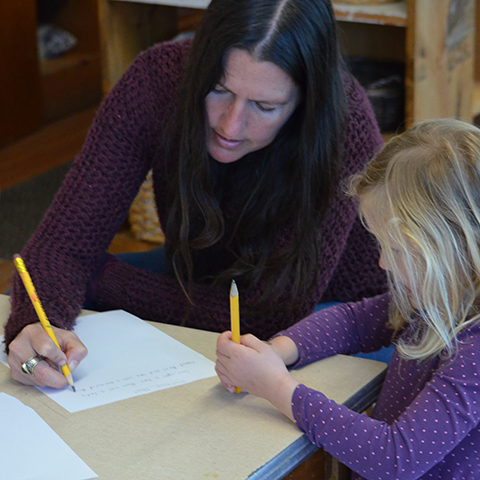
Tara is the lead teacher and joined The Children’s Schoolhouse in 2010. She has become an integral part of the Schoolhouse community and its current curriculum. Tara was educated on the open school philosophy in high school and has worked with children of different ages, for over 20 years. When her children were young she co-founded a cooperative preschool in Boone, N.C. Her daughters have since grown and Tara continues to imprint on children’s lives and share her passions for gardening, cooking, art, and creativity.
Chelsie Cole

Chelsie Cole was born and raised in Northern Michigan, and grew up skiing, participating in gymnastics & softball. Through high school & college, she worked in the hospitality industry, at a local daycare, and spent time as a nanny. She moved to North Carolina 8 years ago wanting to get away from the Michigan winters. She initially managed Sky Mountain Coffee within Lowe’s before being hired as General Manager of Millstone Bakery, where she was able to combine her love of coffee, food, and wine. After having her daughter, Avery, she wanted to step away from hospitality and spend time with family. After seeing Avery’s love for The Children’s Schoolhouse, Chelsie decided to join as Assistant Teacher because she loved the concept of learning through play! In her spare time, she enjoys gardening, live music, spending time outdoors. She looks forward to seeing the Schoolhouse children grow and learn throughout the years.
A Day at the Schoolhouse
A day at The Children’s Schoolhouse is anything but typical. However, the following is a loose summary of how your child may spend his/her day. Please note that this schedule is not rigid and the teachers will adapt and change the schedule as needed depending on the children and their response to various activities and the curriculum in general.
9:00 - 9:15 a.m.
Parents drop off child at Schoolhouse
9:15 - 10:00 a.m.
Children begin the day on the playground
10:15 - 11:45 a.m.
During group time, children often read books, sing songs and finger play and share stories and music. Children also have free choice where they are told what centers are available and each child chooses where he/she would like to begin working. Children are encouraged to learn, explore and create in the various learning centers. Snack is included as a free choice.
11:45 a.m. - 12:00 p.m.
Clean up and second circle includes music and sharing Schoolhouse News (children’s stories).
12:00 - 12:30 p.m.
Lunchtime
12:30 - 1:00 p.m.
Playground and dismissal
Outdoor Play
large muscle development
small muscle development
dramatic play and all its possibilities
emotional and physical release
problem solving
decision-making
curiosity about the natural world
creative expression
body-eye coordination
understanding of physical limits
respect for the rights of others and the observance of safety rules
understanding of speed, height, weight, impact, balance
awareness of weather, seasons and temperature in a meaningful way

Dramatic Play
imitate the actions of others
take care of their own needs
make choices and offer choice-making opportunities to others
make judgments
develop vocabulary
share personal experiences
acquire skills with equipment
work through stress, anger, fear and other feelings
try out new ideas in a safe environment
make comparisons
differentiate between fantasy and reality
develop memory
grow in their understanding of time – past, present and future
expand their concentration range
develop gross and fine motor skills
explore a variety of family structures and social arrangements
meet new values, customs, traditions and celebration styles
solve problems
savor their new-found knowledge
Building Blocks
promote versatility and creativity
provide opportunities for learning in several areas at once including math, physics, spatial relations, verbal and social growth, problem solving, decision making, small and large muscle coordination, aesthetics and the growth of imagination
block building is a three dimensional art experience, valuable to children in a world that is too often dominated by two dimensional experiences
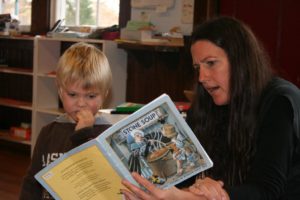
Literature
provides language experience
serves as a window through which visions of the beyond may soar
provides opportunities for problem solving
develops imagination, creativity and enjoyment
quiets a child’s inner turmoil, helping the child to understand and accept the contradictions of his feelings of love, hate, anger, joy and fear
allows children to identify with the characters and the character’s feelings
provides opportunity for discussion
encourages the ability to refine ideas and make connections, to be aware of other’s thinking and to listen
stimulates a sense of wonder and mystery
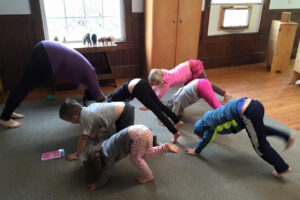
Music & Movement
provides an opportunity for children to have fun
allows children to experience rhythm, mood, and melody in a relaxed, joyful atmosphere
allows children to express their moods and assimilate information
aids language development
exposes children to different cultures as well as their own cultural heritage
helps children gain control of their bodies in ways they would be less apt to do spontaneouslyprovides language experience
serves as a window through which visions of the beyond may soar
provides opportunities for problem solving
develops imagination, creativity and enjoyment
quiets a child’s inner turmoil, helping the child to understand and accept the contradictions of his feelings of love, hate, anger, joy and fear
allows children to identify with the characters and the character’s feelings
provides opportunity for discussion
encourages the ability to refine ideas and make connections, to be aware of other’s thinking and to listen
stimulates a sense of wonder and mystery
Math
Math is not taught in one center, rather taught throughout the day in every area of the classroom
Number experiences can be found in block play, setting the table, arranging chairs, grouping children, toys, talking about birthdays and ages, arranging car groups for trips, telling stories, singing games, reading books and so on…
At The Children's Schoolhouse, we believe that children learn best when they can choose and discover, question and understand and most of all be unique.
Quick Links
© Copyright 2026 The Children's Schoolhouse. No content may be used without written permission.
Facebook
Instagram